
This January marks the 35th anniversary of Operation Desert Storm, the combat phase of the Persian Gulf War that began on January 17, 1991. Launched exactly 35 years ago today, this swift and overwhelming campaign demonstrated American leadership, military excellence, and the power of international unity in defending sovereignty and upholding the rule of law. For the veterans who served in the sands of the Middle East, Desert Storm remains a proud chapter of service, sacrifice, and success in protecting freedom against aggression.
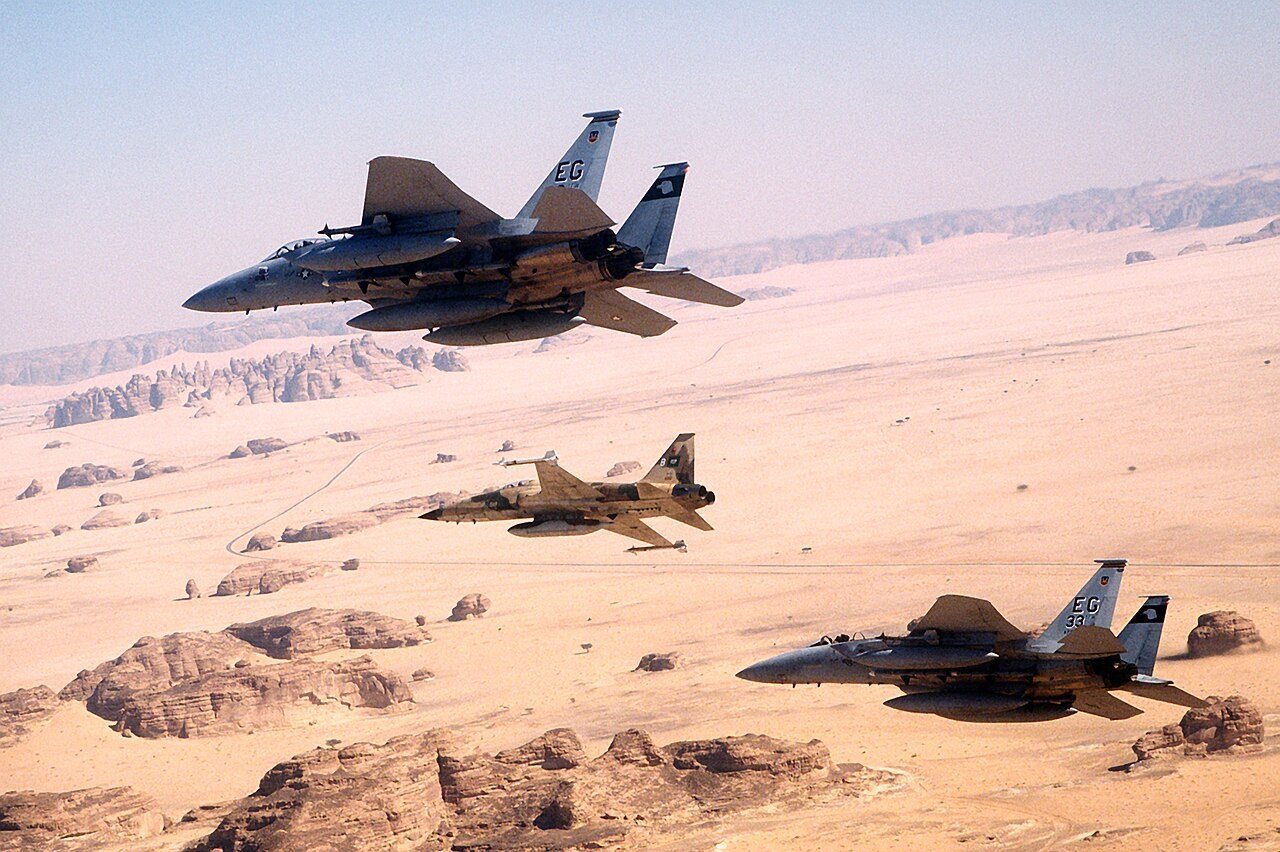
The conflict began when Iraqi dictator Saddam Hussein invaded and annexed neighboring Kuwait on August 2, 1990, seizing control of vast oil reserves and threatening regional stability. In response, the United States—under President George H.W. Bush—built a broad international coalition of 39 nations, including key Arab allies like Saudi Arabia, Egypt, and Syria, as well as NATO partners and former Cold War adversaries. This unprecedented alliance reflected the post-Cold War hope for a "new world order" where aggression would not go unchallenged.
The operation unfolded in two phases: Operation Desert Shield (August 1990—January 1991), the defensive buildup to protect Saudi Arabia, and Operation Desert Storm, the offensive to liberate Kuwait. On the night of January 16-17, 1991, coalition air forces launched a massive, precision-guided bombing campaign that crippled Iraqi command, air defenses, communications, and supply lines.
These historic images capture the opening salvos of the air campaign—F-15 Eagles and other advanced aircraft soaring into action, embodying technological superiority and unyielding determination:
Over five weeks, coalition aircraft flew more than 100,000 sorties, dropping 88,500 tons of bombs and achieving total air supremacy. Iraqi forces, once feared as the fourth-largest army in the world, were devastated before the ground war even began.
On February 24, 1991, the 100-hour ground offensive—Operation Desert Sabre—unleashed a lightning-fast armored thrust. Coalition forces, led by U.S. armored divisions and Marines, executed a brilliant "left hook" maneuver through the desert, outflanking and overwhelming Iraqi positions. Kuwait was liberated in days, with coalition troops advancing into southern Iraq before a cease-fire took effect on February 28.
The ground campaign produced iconic scenes of decisive victory: destroyed Iraqi tanks littering the desert and coalition armor advancing relentlessly.
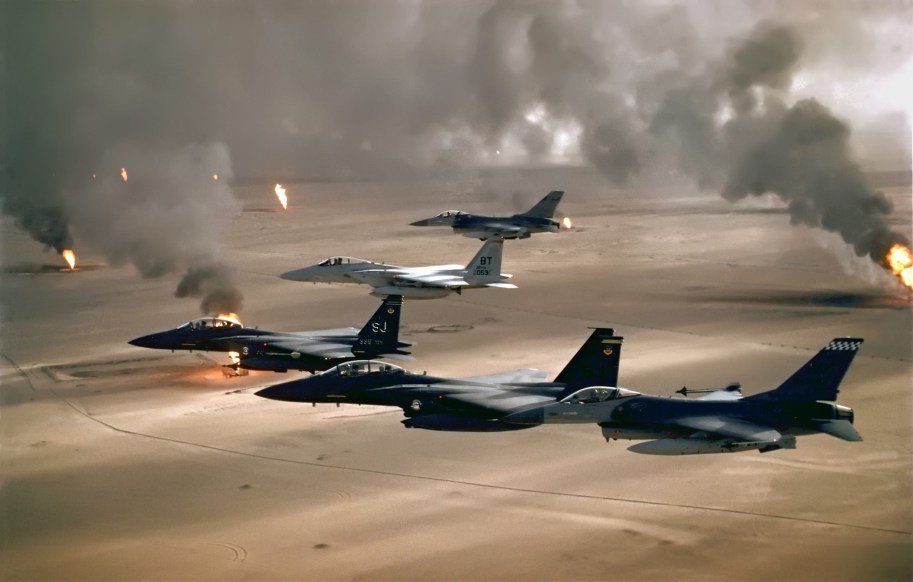
The human cost was tragically high for Iraq, with tens of thousands of casualties, while coalition losses were remarkably low: the U.S. suffered 147 battle deaths and 145 non-battle deaths. This disparity underscored the effectiveness of superior planning, training, and technology.
The retreating Iraqi army set fire to hundreds of Kuwaiti oil wells, creating an environmental catastrophe and stark symbols of destruction.
Desert Storm showcased American ideals at their finest: resolute defense of allies, commitment to international law, rapid and decisive action to restore justice, and care to minimize unnecessary suffering. It proved that when free nations stand together, tyranny can be confronted and defeated efficiently.
These powerful tributes honor the Gulf War veterans who returned home to welcoming parades and a grateful nation, as well as those who continue to serve as reminders of sacrifice.
To the Desert Storm veterans of VFW Post 8555 and across our great nation: your swift victory liberated a sovereign country, restored hope in a volatile region, and reaffirmed America's role as a beacon of freedom. Thirty-five years later, your service inspires us to remain vigilant, united, and proud. We remember your valor, honor your sacrifices, and thank you for defending the principles that make our country strong.
- Details
- Written by: Johnathon Farrell
- Category: News
- Hits: 69
On the quiet evening of February 15, 1898, in the harbor of Havana, Cuba, a tremendous explosion tore through the United States battleship USS Maine, claiming the lives of 260 American sailors and officers—more than two-thirds of her crew. The sudden, catastrophic loss of this proud vessel sent shockwaves through the United States, igniting public outrage, fueling patriotic fervor, and setting the stage for the brief but decisive Spanish-American War. For generations of American veterans, the story of the Maine stands as a solemn reminder of sacrifice, the high cost of duty, and the enduring resolve of our nation to stand for freedom and justice.
The USS Maine, a second-class battleship commissioned in 1895, had been dispatched to Havana in late January 1898 to protect American lives and interests amid Cuba's ongoing struggle for independence from Spanish colonial rule. Tensions between the United States and Spain had been rising for years, with widespread American sympathy for the Cuban revolutionaries. The Maine's presence was intended as a show of strength and reassurance, not provocation.
At approximately 9:40 p.m., while peacefully at anchor, a massive internal explosion ripped through the forward section of the ship, detonating her magazines and sinking her rapidly. The blast was heard across Havana, and the night sky lit up with Bj the fury of destruction.
- These historic images capture the devastating moment and its aftermath—the explosion that shook the world and the twisted wreckage that remained in Havana Harbor:
The cause of the explosion has never been definitively proven. Initial U.S. Navy investigations in 1898 concluded it was likely an external mine, though Spanish inquiries pointed to an internal accident. Later reviews—including a 1911 inquiry, a 1976 study commissioned by Admiral Hyman G. Rickover, and a 1998 National Geographic analysis—have leaned toward an internal cause, possibly a spontaneous fire in a coal bunker igniting the forward magazines. Despite the uncertainty, the immediate American response was clear: many believed Spain bore responsibility.
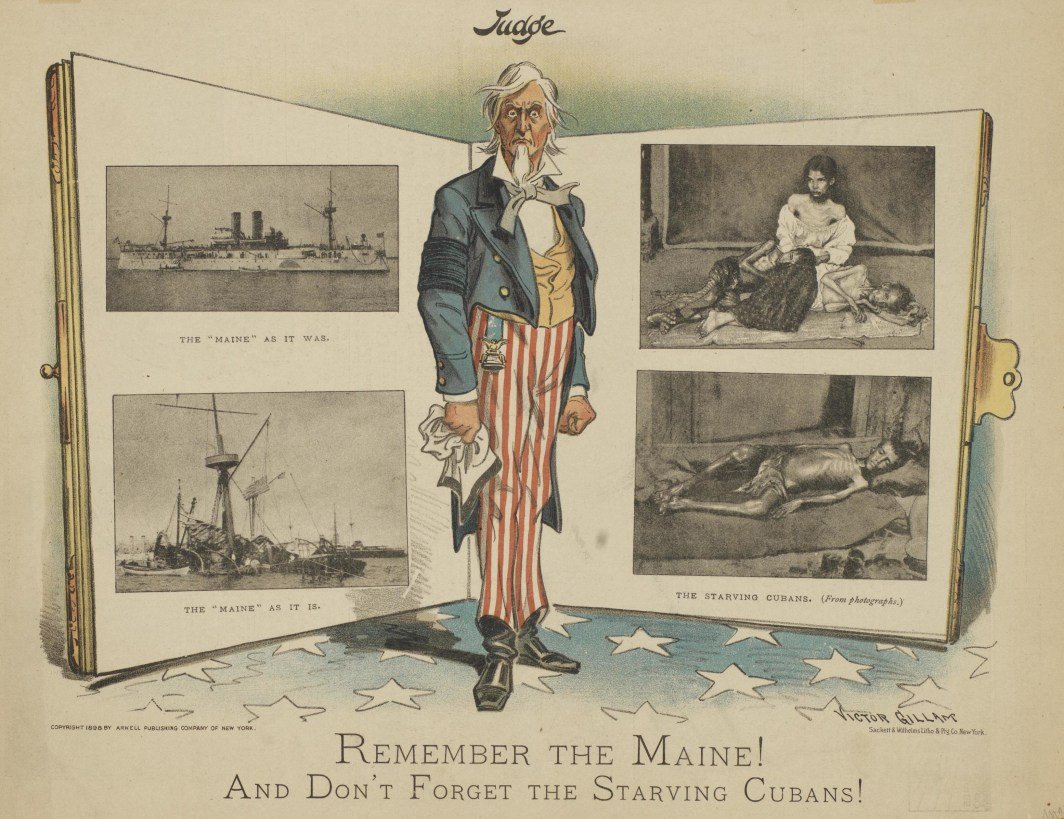
Yellow journalism in newspapers amplified the tragedy, with headlines and illustrations fueling the rallying cry "Remember the Maine! To hell with Spain!" This powerful propaganda helped unite the nation in support of intervention.
This iconic poster from the era captured the public's outrage and patriotic call to action, blending remembrance of the fallen with solidarity for the suffering Cuban people:
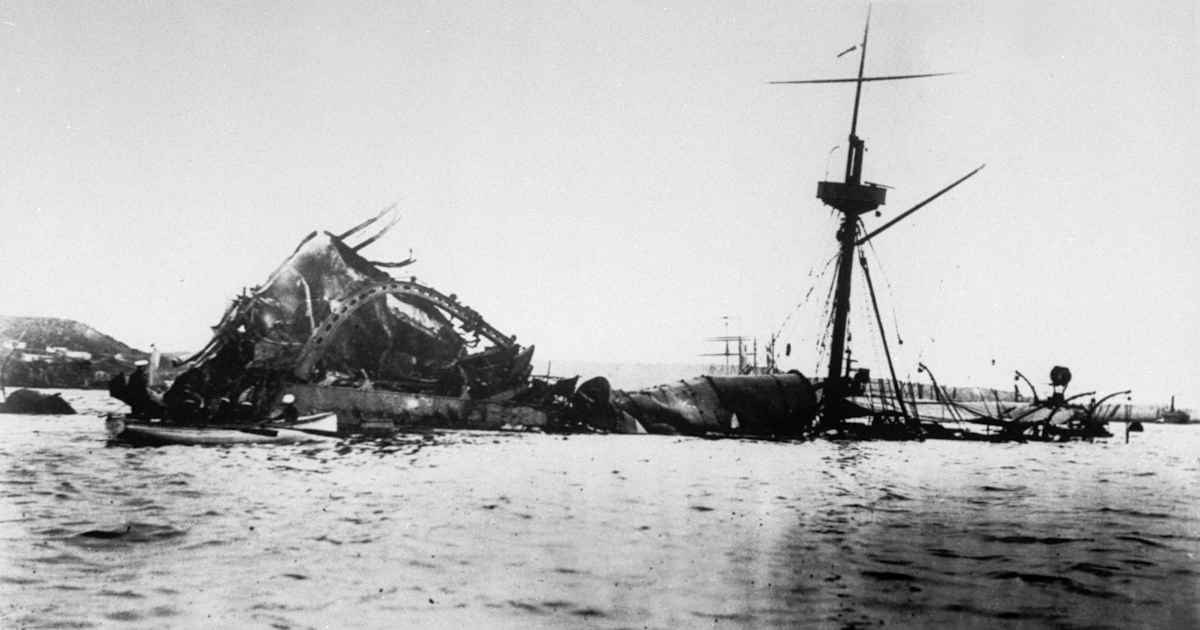
The sinking of the Maine accelerated the path to war. On April 21, 1898, the United States declared war on Spain. In the swift conflict that followed, American forces achieved decisive victories, liberating Cuba, Puerto Rico, Guam, and the Philippines from Spanish control. The war marked America's emergence as a global power and advanced the ideals of liberty and self-determination.
In the years that followed, the nation honored the Maine's fallen heroes with
lasting tributes. Many of the recovered remains were laid to rest at Arlington
National Cemetery, where the ship's main mast stands as a poignant memorial. Others rest in Key West, Florida, under a statue of a sailor holding an oar— symbols of eternal vigilance and sacrifice.
To the veterans of VFW Post 8555 and all who have worn the uniform: the story of the USS Maine is part of our shared legacy. It reflects the American ideals of courage in the face of uncertainty, unwavering commitment to protecting freedom, and the sacred duty to remember those who gave their last full measure. Though the exact cause remains a mystery of history, the valor and sacrifice of those 260 brave sailors endure as an inspiration to every generation.
We remember the Maine. We honor their service. And we carry forward the patriotic spirit that defines our great nation. Thank you, comrades, for keeping their memory alive.
- Details
- Written by: Johnathon Farrell
- Category: News
- Hits: 72
District 20 is pleased to announce the 2025 winners for this year’s district 20 Voice of Democracy (VOD), Patriot’s Pen (PP), and Teacher of the Year (TA) competitions.
2025 Patriot’s Pen (PP) Winners
- Kedy Ren – Post 6012
- Lalani Tapaidor – Post 8397
- Saket Nadimpalli – Post 12041
2025 Voice of Democracy (VOD)
- Erin Martin – Post 2059
- Hailey Wilson – Post 7108
- Kiana Hampton – Post 837
2025 Teacher of the Year (TA) High School
- Amanda Aguiler – Post 4676 Grades 7–8
- Kevin Murphy – Post 2059 Grades K–6
- Sarah J. Olivera – Post 7108
- Details
- Written by: Johnathon Farrell
- Category: News
- Hits: 372
As we begin this new year, January stands as National Mentoring Month—a time dedicated to recognizing the profound power of guidance, wisdom, and shared experience. Observed throughout the month since 2002, this observance encourages all Americans to celebrate mentors, recruit new ones, and support programs that help young people and those in transition build brighter futures. For the veterans of VFW Post 8555, this month holds special meaning: the lessons of leadership, resilience, and service we learned in uniform are exactly what so many need today.
Veterans bring a unique perspective to mentoring. Years of discipline, teamwork under pressure, and commitment to something greater than oneself equip us to inspire others in powerful ways. Whether sharing career advice with a transitioning service member, helping a young student set goals, or simply offering a steady hand and listening ear, our experiences embody the American ideals of perseverance, duty, and opportunity for all.
One of the most respected voices on leadership and guidance came from General Colin Powell, a distinguished Army veteran who rose to become Chairman of the Joint Chiefs of Staff and Secretary of State. He once wisely advised:
“Learn from the pros, observe them, seek them out as mentors and partners. But remember that even the pros may have leveled out in terms of their learning and skills. Sometimes even the pros can become complacent and lazy. Leadership does not emerge from blind obedience to anyone.”
General Powell's words remind us that true mentorship is active and ongoing—a commitment to lifting others while continuing to grow ourselves. His life of service exemplifies how veterans can pass on the torch of responsibility and excellence to the next generation.
Here are just a few meaningful ways Post 8555 members can get involved this January and beyond:
@ Mentor local youth starting with your own family. Grandparents should share with their children and grandchildren sharing stories of service that instill patriotism and character.
e@ Support transitioning veterans by offering guidance on resumes, interviews, networking, or navigating civilian life, drawing from resources like American Corporate Partners or MilMentor.
@ Volunteer with established programs such as the Floresville AirForce JROTC Program run by Major Morshe D. Araujo USAF (Ret). You can contact the Major at (830) 393-5370 ext. 21509 or by email:
e@ Share your own story at Post meetings or events — Johnathon would like to record and share your experiences in and out of the military that can inspire others to step forward.
These small acts of guidance reflect the enduring American spirit: that freedom and progress depend not only on defending our nation in
uniform, but on building stronger communities one relationship at a time. Mentoring honors our fallen by ensuring their sacrifices lead to a
legacy of opportunity and hope.
If you've ever mentored someone—or been mentored—consider sharing your story with the newsletter. Your experiences can encourage fellow comrades to join in this vital work.
Here are a few inspiring scenes of veterans passing on wisdom and building connections with the next generation: a F BS x ) “ x 6
LEADERSHIP IN ACTION: LESSONS FROM SERVICE
This January, let us recommit to the timeless veteran tradition of service—on and off the battlefield. By mentoring others, we continue to strengthen the fabric of our nation and uphold the ideals for which so many have fought. Thank you for your ongoing dedication, comrades. Together, we lead the way forward.
- Details
- Written by: Johnathon Farrell
- Category: News
- Hits: 75
Fifty-two years ago, on January 27, 1973, the world witnessed a historic milestone in the long and painful chapter of the Vietnam War. The Paris Peace Accords—formally known as the Agreement on Ending the War and Restoring Peace in Vietnam—were signed in Paris, France, marking the official end of direct United States military involvement in the conflict. For the millions of American veterans who served with courage and sacrifice, this agreement represented a hard-fought step toward bringing our troops home, securing the release of our prisoners of war, and upholding the principles of freedom and self-determination that so many fought to defend.
The accords came after more than four years of arduous negotiations, often conducted in secret. Leading the American delegation was National Security Advisor Henry Kissinger, whose determined diplomacy played a central role. On the North Vietnamese side, Politburo member Lê Đức Thọ was the key negotiator. Their efforts earned both men the 1973 Nobel Peace Prize (though Thọ declined the award). The signing ceremony itself brought together representatives from the United States, the Republic of Vietnam (South Vietnam), the Democratic Republic of Vietnam (North Vietnam), and the Provisional Revolutionary Government of South Vietnam.
Here are iconic images from that historic signing on January 27, 1973, capturing the solemn moment at the negotiating table and the handshake between Kissinger and Thọ:

The core provisions of the accords reflected difficult compromises made in pursuit of peace:
- An immediate cease-fire across Vietnam.
- The complete withdrawal of all U.S. troops and military personnel within 60 days.
- The release of American prisoners of war (POWs), with 591 Americans returning home between February and March 1973.
- Recognition of the sovereignty and right of the South Vietnamese people to self-determination.
- The continuation of the Demilitarized Zone (DMZ) at the 17th parallel as a provisional boundary, with the goal of eventual peaceful reunification.
- The establishment of an International Commission of Control and Supervision (composed of Canada, Hungary, Indonesia, and Poland) to monitor compliance.
These terms allowed North Vietnamese forces to remain in the South—a concession that proved controversial—but they also preserved the existence of the Republic of Vietnam government under President Nguyen Van Thieu and committed the United States to postwar reconstruction aid.
For American veterans, the accords carried profound meaning. They brought an honorable end to our nation's direct combat role, fulfilled the promise to bring every American home, and demonstrated the resilience of our service members who endured years of hardship in defense of freedom and anti-communist ideals. The release of POWs was especially poignant—a moment of joy and relief after years of uncertainty for families across the United States.
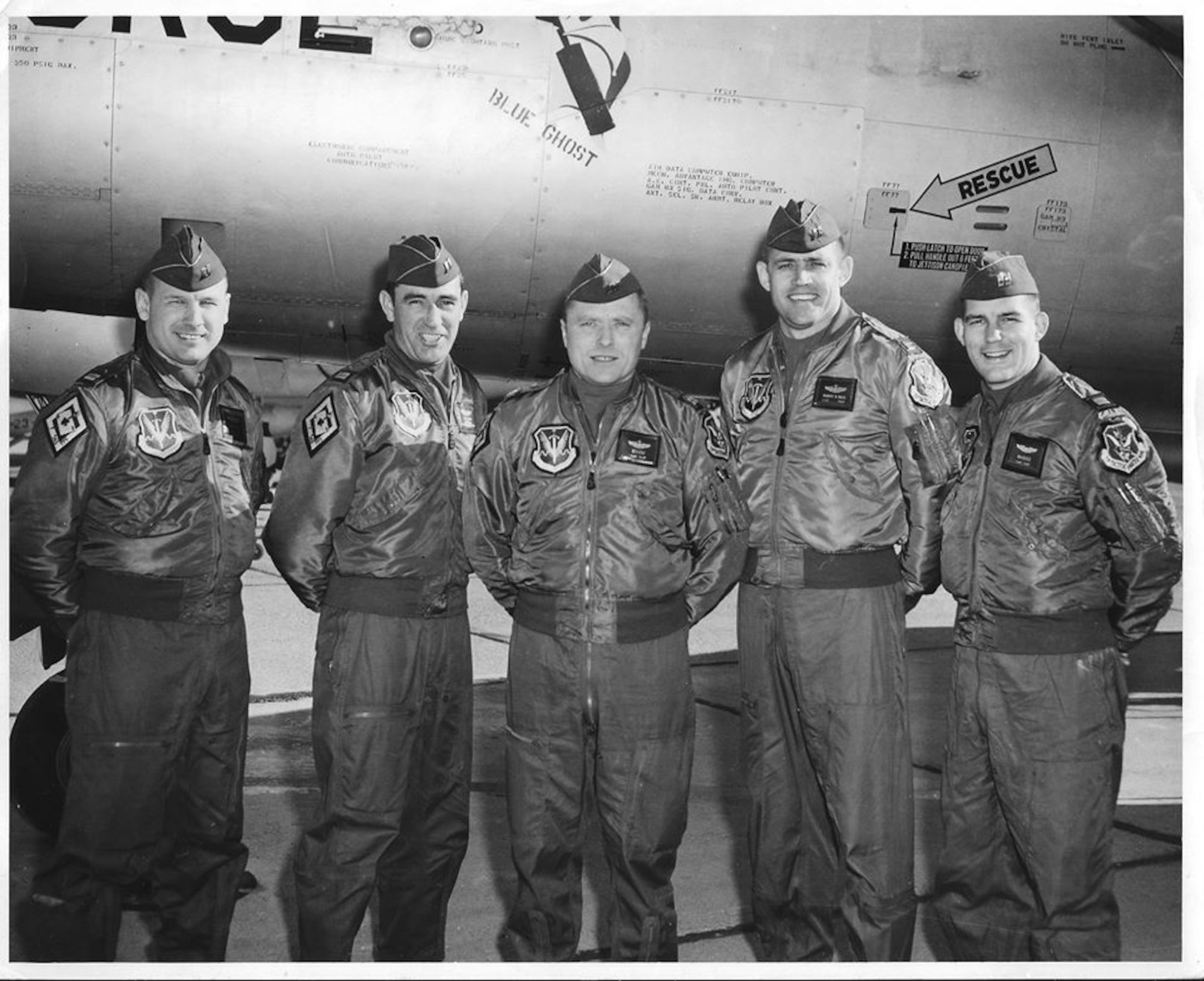
These images remind us of veterans and communities reflecting on the legacy of that day, honoring the sacrifices made and the hope for lasting peace:
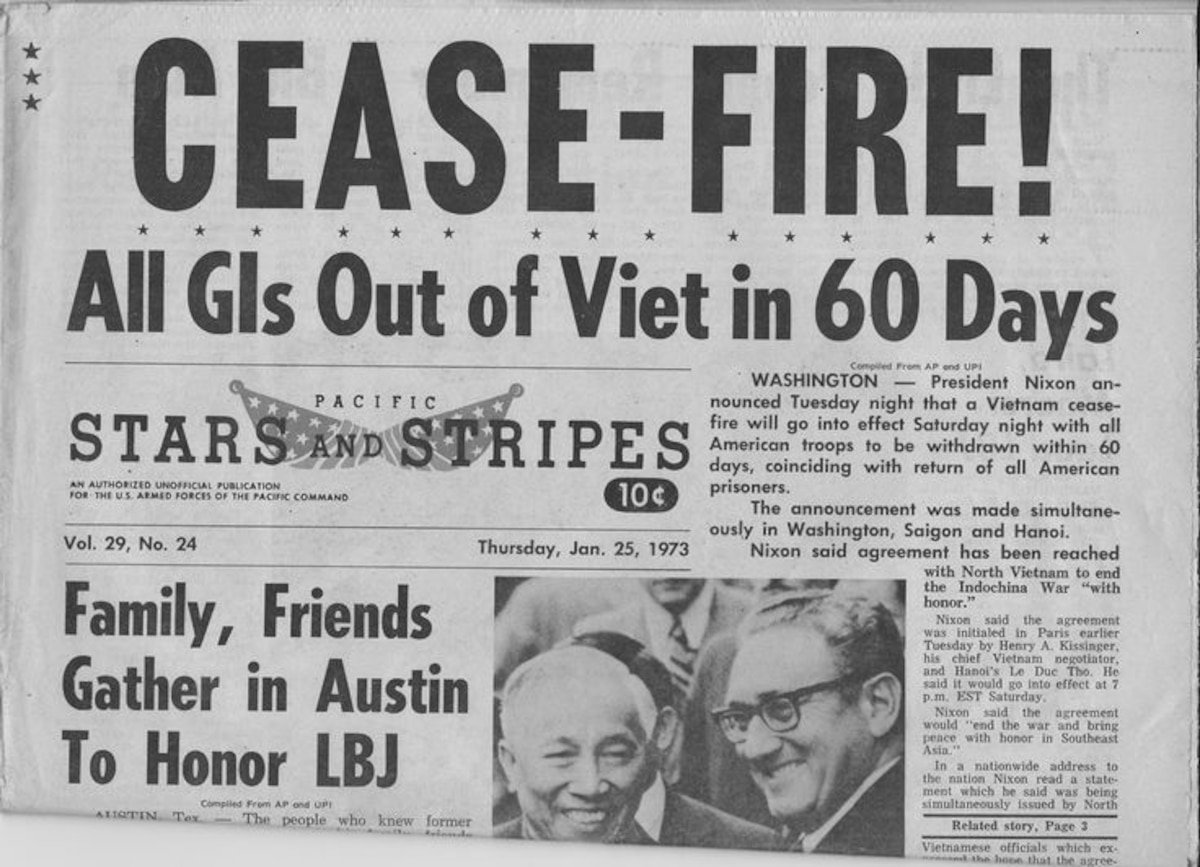
Sadly, the peace proved fragile. Violations of the cease-fire occurred almost immediately, and full-scale fighting resumed within months. By 1975, North Vietnamese forces overran the South, leading to the fall of Saigon and the reunification of Vietnam under communist control. The accords did not deliver the lasting peace many hoped for, yet they stand as a testament to American determination to seek honorable resolutions and to the unwavering service of those who answered the call during one of our nation's most challenging conflicts.
To our Vietnam-era veterans of VFW Post 8555: Your valor, endurance, and patriotism remain an enduring source of pride. The Paris Peace Accords marked a chapter's close in a war that tested our nation, but your legacy of duty, honor, and love of country continues to inspire generations. We remember, we honor, and we thank you.
- Details
- Written by: Johnathon Farrell
- Category: News
- Hits: 448